
The Corrupt Officers’ Reach
Crimson LakeThis thread follows Ted’s encounters with Lou Damford and Steven Hench from local intimidation to the discovery that their authority has concealed a long-running pattern of abuse and blackmail.
increasing Bearing strength in each event
 decreasing
Bearing strength in each eventdecreasingA Routine Stop That Is Not Routine
A Routine Stop That Is Not Routine
Power without cause
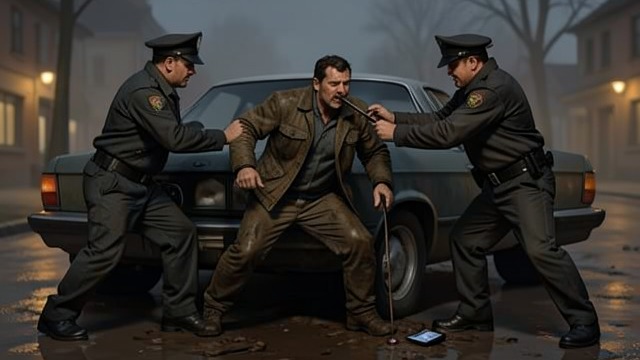
Lou Damford and Steven Hench stop Ted on a rural road despite his objection that there is no reason to pull him over. They search him and his car, scatter his belongings, and use a photograph of his daughter Lillian to taunt him about the accusation that has made him a pariah.
The officers’ cruelty is not limited to words. When Ted reaches for his phone, Steven Hench strikes him with a baton and drops the device in the mud, leaving Ted injured and humiliated.
A local warning
Amanda tells Ted that the two officers are influential in the area and that he should stay away from them. Her warning is notable because the otherwise defiant woman seems genuinely uneasy around the pair.
Ted realizes that their hostility may exceed ordinary prejudice toward a suspect. The stop introduces the officers as a threat that operates through their badge, their physical force, and their apparent confidence that no one will hold them accountable.
The Blocked Doorway
The Blocked Doorway
Humiliation outside the house
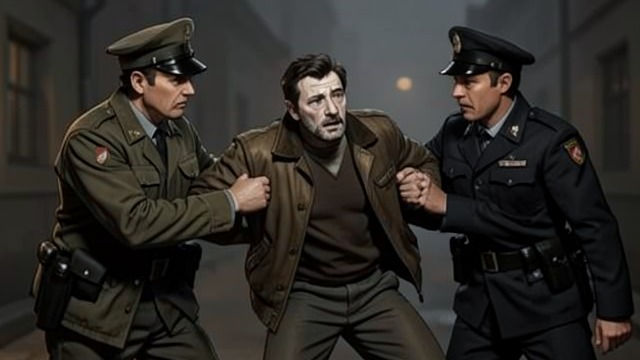
After Ted gives Stella Scully the news that investigators have identified Jake’s remains, Lou Damford and Steven Hench block Ted from entering the house. They mock the way he delivered the news and use his alleged crime to degrade him in front of Amanda and the other officers.
Ted answers their taunts, accusing them of disliking him because he is another former police officer in town. Their silence and aggression make the exchange feel less like professional concern than a deliberate effort to intimidate him.
A threat without words
When Lou Damford grabs Ted’s arm and quietly orders him to leave, Ted experiences the command as an immediate threat to his life. He backs away rather than risk a confrontation he believes the officer could make fatal.
The encounter deepens Ted’s suspicion that the officers are protecting a private sphere of power. Their conduct is openly hostile, but their authority and the presence of their chief make it difficult for Ted to challenge them safely.
A Search Without Restraint
A Search Without Restraint
Forced entry
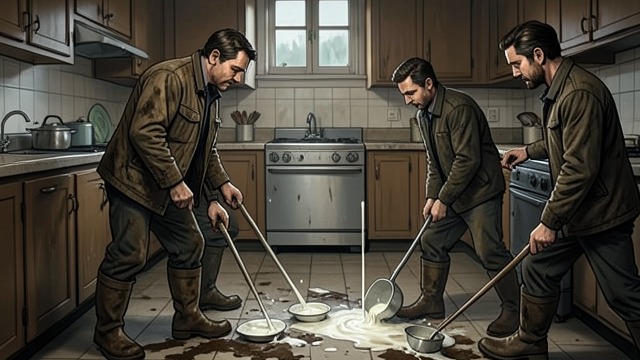
Lou Damford and Steven Hench enter Ted’s house, claiming they are investigating reports of explosives and have approval to search the premises. Ted disputes their account, and the officers offer no convincing explanation for their actions.
They destroy dishes, smash jars, and pour milk across the kitchen floor. Their search looks less like a disciplined investigation than a performance of control designed to leave Ted’s home unusable.
Evidence of private interests
Amanda tries to shield the geese while the officers wreck the house. Her quiet response to the raid contrasts with Ted’s anger and suggests that the officers have frightened her before.
After they leave, Ted investigates their histories and discovers that both men have remained constables for decades. He also finds information linking Lou Damford to an expensive speedboat, raising questions about how a local officer could afford it.
The Past Behind the Case
The Past Behind the Case
An old connection surfaces
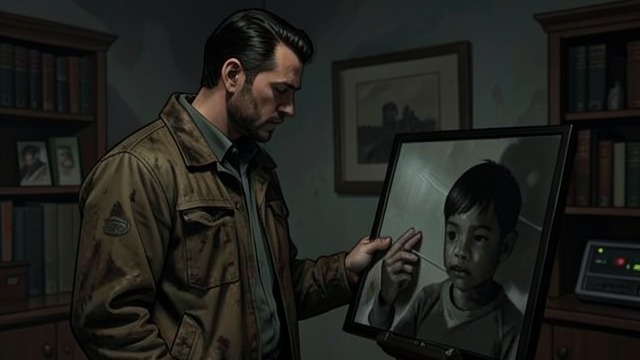
Ted’s discovery that one of the photographs shows Dynah Freeman as a child changes his understanding of the officers’ behavior. Their hostility may be connected not only to his arrival in town but also to a history of crimes that Dynah has been afraid to describe.
Dynah explains that Lou Damford was Lauren’s adult boyfriend and that Steven Hench was involved in the exploitative “Special Project.” The officers used their uniforms and authority to coerce girls into posing for photographs, then concealed the abuse behind their police status.
A pattern of power
The photographs imply that the officers could use compromising images to threaten powerful people and extract money or favors. Dynah’s memories of the men’s conduct show how they relied on fear and status to silence the girls and control what happened afterward.
Ted’s inquiry now has a wider implication: the same officers who have been attacking him may have spent years using the law as cover for their own predation. The information ties local intimidation to a much older abuse of authority.
Exposure and Arrest
Exposure and Arrest
A public account emerges
After the confrontation that brings Harrison Scully’s crimes to light, Dynah gives a public account of what happened to the girls at Kissing Point. Her testimony exposes the role of Lou Damford and Steven Hench in the abuse that preceded Lauren Freeman’s death.
The narrative that had treated Amanda as an inexplicable teenage killer can no longer contain the facts Dynah describes. The photographs, the coercion, and the officers’ actions become part of the story that investigators must confront.
Authority loses its cover
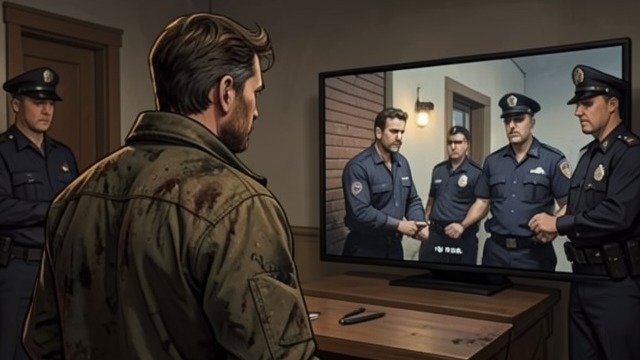
Amanda later watches footage of Lou Damford and Steven Hench being arrested at their homes. The men who once used their badges to frighten girls and intimidate Ted are finally subject to police scrutiny themselves.
Their arrest does not undo the harm to Amanda, Lauren, or Dynah, but it changes who is believed and who is held responsible. The officers’ long-standing power has depended on keeping the victims’ account hidden; public disclosure breaks that protection.
During Ted and Amanda’s first trip toward South Crimson Lake
When police arrive to tell Stella Scully that Jake is dead
After explosives destroy the letterbox at Ted’s house
After Ted finds six photographs hidden in his kitchen
In the hours after the final confrontation at the pier
